
Understanding Championship Betting Odds: A Complete Guide
 Available in US
The Championship sits in this weird middle ground of English football where everyone thinks they understand it, but betting markets consistently prove otherwise. You've got former Premier League giants slumming it alongside clubs that haven't seen top-flight football since the 1980s, all battling in what's genuinely one of the most unpredictable leagues in world football. And that unpredictability? That's exactly where betting opportunities live.
Let me be straight with you—if you're coming to Championship betting expecting the same patterns you see in the Premier League, you're going to lose money. Fast. The second tier operates under completely different dynamics, and understanding those differences separates profitable bettors from people funding bookmaker bonuses.
This isn't your standard "here's what odds mean" guide that treats you like you've never seen a betting slip. We're going deeper. You'll learn why Championship odds behave differently than top-flight markets, how bookmakers price these matches, where inefficiencies hide, and most importantly, how to identify genuine value when it appears. Because in the Championship, value doesn't announce itself with flashing lights—it disguises itself as unremarkable mid-table Tuesday night fixtures that casual bettors ignore completely.
How Betting Odds Actually Work in Football
Betting odds represent two things simultaneously, and most bettors only understand one of them. First, they indicate implied probability—bookmaker's assessment of how likely an outcome is. Second, they show potential return on your stake. The mistake people make is thinking these odds represent objective truth about match outcomes. They don't. They represent bookmaker opinion adjusted for market forces, risk management, and customer betting patterns.
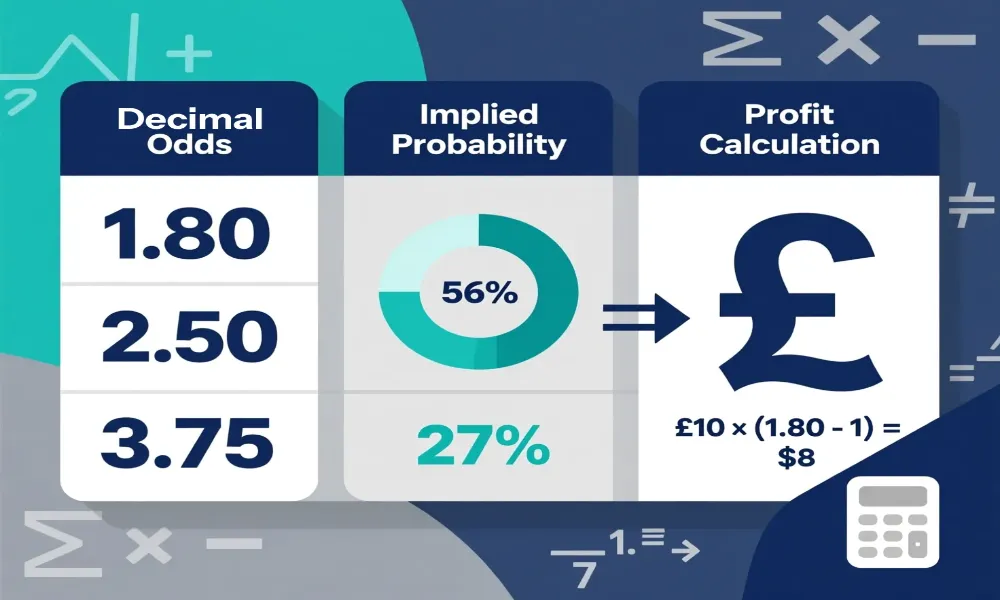
Let's use real numbers because abstract explanations are useless. When you see Leeds United priced at 1.80 to beat QPR, that's not the bookmaker saying Leeds has exactly 55.56% chance of winning (which is the mathematical implied probability). It's the bookmaker saying "after accounting for our margin, customer demand, and risk exposure, we're offering these odds." The actual probability Leeds wins might be 50%, might be 60%, might be somewhere in between. Your job as bettor is determining whether that gap creates value opportunity.
Decimal odds—the 1.80, 2.50, 3.75 numbers you see—represent your total return including stake. Bet ten pounds at 1.80, you get eighteen pounds back if you win. Simple multiplication, no complexity. Fractional odds like 4/5 or 6/4 show profit relative to stake, which some British bettors prefer but honestly just adds unnecessary mental arithmetic. American odds with plus and minus signs confuse everyone outside North America and we're not dealing with them here.
The crucial concept most bettors miss is implied probability versus actual probability. Take those 1.80 odds on Leeds. Divide 100 by 1.80, you get 55.56%—that's implied probability. But bookmakers build margin into odds, typically 5-8% overround across all outcomes. So if Leeds is genuinely 52% to win, the draw 26%, and QPR 22%, those percentages total 100%. But bookmaker odds will total 106-108% when converted to implied probabilities. That extra 6-8% is their profit margin, called the overround or vig.
Here's where it gets interesting for Championship betting. Bookmaker margins on Championship matches often run slightly higher than Premier League games because there's less betting volume and less market efficiency. They're protecting themselves against information they might not have. When you're setting odds for Manchester City versus Arsenal, you've got thousands of sophisticated bettors, advanced algorithms, and comprehensive data forcing odds toward accuracy. When you're pricing Millwall versus Preston on a Wednesday night? Much less scrutiny, which means larger margins and occasionally larger mistakes.
Understanding bookmaker margins helps identify which bets offer genuine value. If you're calculating a team has 60% chance of winning but bookmaker odds imply 55% after removing their margin, you've potentially found value bet. Do this consistently across enough wagers, and mathematics works in your favor long-term. Miss this step, and you're just hoping.
Championship-Specific Betting Considerations
The Championship is gloriously chaotic in ways that terrify bookmakers and excite sharp bettors. Any team can beat any other team on any given Saturday, and I'm not being hyperbolic. You'll watch Burnley with their parachute payments and Premier League-quality squad lose to Plymouth, then three days later demolish Sheffield United. The variance is real, constant, and exploitable.
This unpredictability stems from several factors working simultaneously. Squad depth varies wildly between clubs operating on different financial levels. Burnley's bench could compete in the Championship. Rotherham's bench is hoping to compete in the Championship. When fixture congestion hits—and in a 46-game season it always hits—some clubs cope, others collapse. Knowing which clubs have depth and which are running on fumes creates betting edges.
Travel distances in the Championship sound trivial until you realize these aren't Premier League clubs with private jets and million-pound recovery facilities. Plymouth traveling to Sunderland is a proper expedition. Midweek away matches after weekend travel mean tired legs and sluggish performances. Home advantage in the Championship matters more than in the Premier League, and understanding why—it's not just crowd atmosphere, it's cumulative fatigue and travel disruption—helps you spot systematically mispriced markets.
Managerial volatility makes Championship betting particularly interesting. Premier League clubs show some patience with managers because the financial stakes are astronomical. Championship clubs? They'll sack a manager after three losses because they're desperate for promotion or terrified of relegation. New manager bounce is real, statistically documented, and creates temporary value opportunities. When a club like Watford appoints their fourth manager of the season, odds often don't properly account for the short-term performance lift that typically follows.
Tactical diversity in the Championship exceeds what you see in the Premier League. Top-flight clubs mostly play variations of possession-based, high-pressing football because that's what works at elite level. Championship? You've got Tony Pulis disciples playing route-one football, continental managers trying to play out from the back with technically limited players, and everything in between. These tactical clashes create predictable patterns once you understand each manager's approach. A possession-obsessed team facing a low-block counter-attacking side produces different betting opportunities than two pressing teams creating basketball-style matches.
The financial gap within the division is absurd. Relegated Premier League clubs receive parachute payments of around forty million pounds annually. Clubs promoted from League One might operate on budgets under ten million. That's a 4:1 spending ratio competing in the same league. Yet the promoted clubs regularly beat the parachute payment teams because football isn't purely about money—it's about momentum, cohesion, and belief. Bookmakers adjust odds for squad quality, but they sometimes underestimate psychological and systemic factors that swing matches.
Media coverage and public perception in the Championship lag reality by several weeks. Premier League teams get analyzed constantly, with injury news, tactical adjustments, and form shifts immediately reflected in betting markets. Championship clubs? Unless you're following closely, you might not realize that Burnley's key midfielder has been playing through injury for three matches, or that Luton changed formation two weeks ago and suddenly looks defensively solid. This information lag creates value for bettors doing proper research.

Why Championship Odds Differ From Premier League
Liquidity might sound like a finance term, but it's crucial for understanding betting markets. Premier League matches attract massive betting volume—millions of pounds wagered on single matches. That volume includes sharp professional bettors whose money moves markets toward efficiency. Championship matches? Significantly less volume, fewer professional bettors, more casual punters backing their local club regardless of value.
Lower liquidity means odds can be more easily influenced by individual bets, but it also means bookmakers protect themselves with wider margins. If a big bet comes in on Sheffield Wednesday, bookmakers might not have enough balancing action on the opponent, so they adjust odds more dramatically than they would for a Premier League match with balanced betting on both sides.
The quality of information available differs dramatically. Premier League clubs have massive analytics departments, their data gets scrutinized by hundreds of analysts, and injury news breaks immediately across multiple platforms. Championship clubs often have skeleton analytics staff, less media scrutiny, and information travels more slowly. This asymmetry creates opportunity for bettors willing to dig deeper than surface-level form guides.
Market efficiency relates directly to information quality and volume. Efficient markets—like Premier League betting—quickly incorporate new information into odds. Less efficient markets—like Championship betting—react slower, creating windows where informed bettors can capitalize before odds correct. When news breaks that Burnley's striker is doubtful for Saturday's match, Premier League markets would adjust within minutes. Championship markets might take hours, and casual bookmakers might not adjust adequately at all.
Bookmaker focus and expertise varies by league. The traders setting Premier League odds are typically the most experienced, most skilled analysts bookmakers employ. Championship odds might be set by less experienced traders using more automated systems with less manual oversight. This isn't incompetence—it's resource allocation. Bookmakers make most money on Premier League betting, so they dedicate best resources there. Championship is important but secondary, which occasionally results in softer odds.
Public perception versus reality creates the biggest value opportunities. Casual bettors overrate big-name clubs and underrate unfashionable ones. Leicester City gets bet heavily because of their name recognition regardless of their actual form. Millwall gets underbet because casual punters see them as rough, unglamorous, and assume they're worse than they actually are. These perception gaps appear less frequently in Premier League markets where there's enough sharp money to correct mispricing quickly.
The playoff system adds complexity that bookmakers sometimes misprice. Championship betting isn't just about who wins matches—it's about who finishes in promotion spots or playoff positions. A team safe in mid-table might have completely different motivations than a team fighting for playoffs, even if their underlying quality is similar. Late-season matches where playoff permutations get complicated often see odds that don't properly account for motivation levels and tactical approaches based on what results teams need.
Long-term value can often be found in Championship promotion and relegation betting.
Reading and Interpreting Championship Odds Properly
Odds movement tells stories if you're paying attention. When odds shorten—move from 2.50 to 2.20, for example—it means more money is being placed on that outcome. But why is critical. Is it sharp money from professional bettors who've identified value? Is it public money from casual fans backing their team? Is it the bookmaker adjusting odds proactively based on new information like team news or weather forecasts?
Distinguishing between sharp money and public money separates profitable betting from guesswork. Sharp money tends to arrive early, in larger amounts, from accounts bookmakers have flagged as belonging to winning bettors. Public money arrives closer to kickoff, in smaller amounts, from recreational accounts. When odds move against public betting percentages—75% of bets are on Team A but odds drift longer rather than shorten—it signals sharp money is on Team B. This reverse line movement is powerful indicator of where value likely sits.
Steam moves—sudden dramatic odds changes across multiple bookmakers simultaneously—indicate significant sharp action. In Championship betting, steam moves are rarer than Premier League but more meaningful when they occur because there's less overall market activity to muddy the signal. If you see Middlesbrough odds crash from 2.40 to 2.00 within minutes across several bookmakers, something significant happened. Maybe injury news leaked, maybe weather forecasts changed dramatically, maybe a known sharp bettor or syndicate placed substantial action. Whatever the cause, market is telling you something material changed.
Line freezes happen when bookmakers stop accepting bets on particular market temporarily. This usually means they're waiting for clarity on something—potential team news, weather concerns, or they've taken unbalanced action and need to reassess. In Championship markets, line freezes sometimes indicate bookmaker uncertainty rather than definitive information. If you've done your research and feel confident in your assessment while bookmakers are uncertain enough to freeze markets, you might have genuine edge.
Opening odds versus closing odds reveal market opinion evolution. Opening lines—first odds posted, sometimes days before matches—represent bookmaker's initial assessment. Closing lines—final odds before kickoff—incorporate all information and betting activity. Beating closing line value means you got better odds than final market consensus, which is strong indicator of long-term profitability regardless of individual bet results. If you consistently bet Championship matches at better odds than closing lines, you're demonstrating genuine skill.
Comparing odds across bookmakers isn't optional—it's fundamental. Championship odds can vary significantly between bookmakers because of different risk management approaches and customer bases. One bookmaker might have lots of Sheffield Wednesday fans betting them heavily, forcing odds down. Another bookmaker with different customer base might offer significantly better odds on the same outcome. The difference between 2.20 and 2.40 odds seems minor on single bet but compounds dramatically across hundreds of wagers annually.
Understanding context around odds changes matters as much as the changes themselves. Odds shortening because injury news confirmed key player is fit means something different than odds shortening because recreational bettors are piling money on a big-name club. The former represents material information affecting match probability. The latter represents market inefficiency you might exploit by betting the other side.

Finding the Best Championship Odds Available
Multiple bookmaker accounts aren't luxury—they're requirement for serious betting. Opening accounts costs nothing, takes minutes, and immediately increases your expected value by ensuring you always access best available odds. Professional bettors maintain accounts with five to ten bookmakers specifically for line shopping. You don't need to bet with all of them regularly, but having access when you need it is critical.
Odds comparison sites aggregate prices across dozens of bookmakers, letting you instantly identify best odds for any bet. For Championship matches, these tools are essential because odds variance between bookmakers is often substantial. The match between Norwich and West Brom might be 2.30 at one bookmaker and 2.50 at another—same bet, 9% better payout. Multiply that edge across season of betting and you're talking meaningful money.
Timing your bets optimally requires understanding market patterns. Championship odds typically post 3-4 days before matches. Sharp bettors often bet early, capitalizing on less efficient opening lines before market information gets incorporated. Recreational bettors bet close to kickoff, often moving odds in predictable ways. If you're betting favorites, waiting until closer to kickoff when public money has artificially inflated odds can work. If you're betting underdogs, earlier betting often captures better prices before sharp money drives odds down.
Early markets—odds posted days before matches—offer advantages for prepared bettors. Bookmakers setting these odds work from models and assumptions about likely lineups, but they don't have perfect information yet. If you've tracked injury reports, monitored training ground news, and understand rotation patterns better than opening odds suggest, you can identify mispriced early lines. However, early markets also carry risk because late-breaking news can dramatically change match dynamics.
Enhanced odds promotions and price boosts appear regularly for Championship matches, particularly televised games or local derbies. Bookmakers offer these as customer acquisition and retention tools. They're often genuine value, especially for new customer offers, but read terms carefully. Maximum stakes might be tiny, winnings might come as restricted free bets, and wagering requirements might apply. Enhanced odds at 5.00 with ten-pound maximum stake isn't the same as standard 3.50 odds with no restrictions.
Exchange betting platforms like Betfair operate differently than traditional bookmakers. Instead of betting against the bookmaker, you're betting against other people, with the platform taking small commission. Championship matches on exchanges often have thinner liquidity than Premier League, but they also provide direct insight into market opinion without bookmaker margin obscuring things. Exchange odds represent cleaner assessment of implied probability because bettors are risking their own money rather than bookmakers building protective margins.
Arbitrage opportunities—simultaneously betting multiple outcomes at different bookmakers to guarantee profit regardless of result—occasionally appear in Championship markets because of odds variance between bookmakers. These opportunities are usually small, require fast execution, and disappear quickly. But they objectively prove that Championship odds contain inefficiencies that don't exist in more scrutinized markets. If you're consistently spotting value in Championship betting, you're not imagining things—mathematical proof exists that bookmakers sometimes disagree enough about probabilities to create risk-free profit opportunities.
Using Odds to Make Smarter Betting Decisions
Value betting sounds simple in theory—bet when your assessed probability exceeds bookmaker's implied probability. In practice, it requires honest evaluation of your own analytical abilities and disciplined acceptance that value bets lose regularly. You're not looking for guaranteed winners. You're looking for bets where mathematics is on your side long-term.
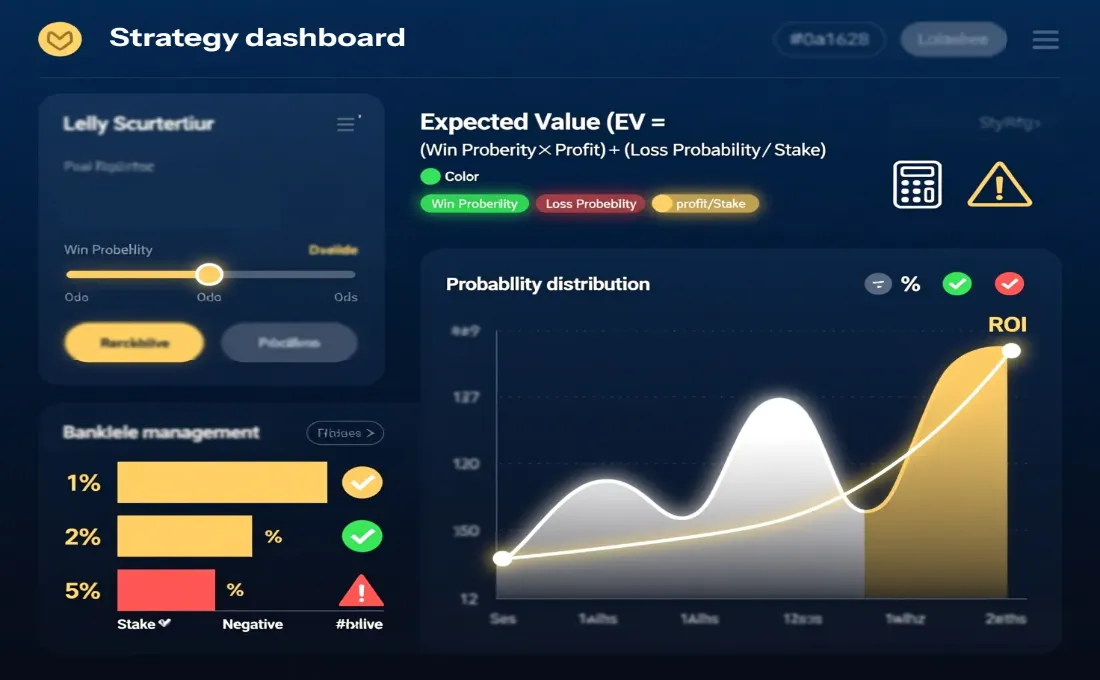
Calculating expected value quantifies whether a bet is profitable long-term. Formula is simple: (Win Probability × Profit if Win) - (Loss Probability × Stake). If Burnley has 55% chance of beating Plymouth but bookmaker odds are 2.00 (implying 50%), you have value bet. Ten-pound stake at 2.00 odds means 10-pound profit if you win. Expected value is (0.55 × 10) - (0.45 × 10) = 1.00. Positive expected value means this bet makes money long-term if you're accurately assessing probability.
The challenge is accurately assessing probability. Most bettors overestimate their analytical abilities and see value that doesn't exist. Proper assessment requires statistical models, comprehensive data, tactical understanding, and honest evaluation of uncertainty. If bookmaker implies 60% and you think it's 65%, that's not necessarily value unless you have concrete reasons based on factors bookmaker missed.
Bankroll percentage to risk correlates with confidence and expected value. Higher expected value justifies larger bets, within reason. Kelly Criterion provides mathematical framework for optimal bet sizing based on edge and odds. However, full Kelly is aggressive and many professionals use fractional Kelly—betting quarter or half of what formula suggests—to reduce variance. For Championship betting where variance is naturally high, conservative staking protects against inevitable losing runs.
Long-term thinking separates professional approach from gambling. Individual bet results mean nothing. You'll have winning streaks where everything hits and you feel like genius. You'll have losing runs where nothing works and you question everything. Neither state reflects your actual skill—only large sample sizes reveal truth. Track everything, analyze results after hundreds of bets, and evaluate process rather than individual outcomes.
Identifying systematic biases in Championship odds creates sustainable edges. Maybe you notice that newly promoted League One clubs get underbet in their first Championship season because recreational bettors assume they're outclassed. Maybe bookmakers consistently overprice home favorites in midweek matches because they don't adequately adjust for travel fatigue. These systematic biases, if they exist and you can identify them through rigorous data analysis, represent paths to consistent profitability.
Combining multiple factors improves probability assessment accuracy. Don't just look at recent form and team quality. Consider tactical matchups, travel demands, fixture congestion, weather conditions, motivation levels, refereeing tendencies, and injury situations. The bookmaker is doing this—your job is doing it better or finding angles they missed. Championship betting particularly rewards comprehensive analysis because bookmakers dedicate fewer resources to these matches than top-flight games.
Converting Odds Into Actionable Betting Strategy
Pre-match betting allows time for proper research and analysis. You can review statistics, watch tactical breakdowns, assess team news, and make considered decisions. Most profitable bettors operate primarily pre-match because it allows systematic value identification without pressure of live odds swinging wildly based on game events.
In-play betting introduces different dynamics. Odds react to goals, cards, injuries, and momentum shifts in real time. Overreactions create temporary value—when Plymouth scores early against Leicester, Leicester's odds inflate dramatically despite them likely still being better team capable of comeback. In-play betting rewards understanding game flow, recognizing momentum shifts before odds adjust, and having discipline to avoid betting on every match just because it's happening.
Season-long betting on promotion, relegation, and playoff positions offers unique Championship opportunities. These markets are less efficient than match betting because they require projecting 46-game season performance based on partial information. Early season, bookmakers often misprice newly promoted clubs and recently relegated clubs because they're working from priors about typical performance patterns rather than specific team assessment. If you've analyzed summer transfer business, managerial appointments, and tactical approaches better than odds suggest, season-long markets offer substantial value potential.
Player markets—top scorer, assists leaders, player awards—are particularly soft in Championship betting. Bookmakers focus resources on match result markets because that's where volume concentrates. Player markets get less attention, set using broader models rather than deep analysis. If you're tracking underlying statistics—shot volume, shot quality, expected goals, expected assists—you can identify players likely to outperform odds before bookmakers adjust.
Correct score and exact outcome betting offers massive payouts but requires precise prediction rather than directional assessment. These markets in the Championship are even more unpredictable than Premier League equivalents. I generally avoid them because the juice isn't worth the squeeze—too much variance, too little edge. However, some professional bettors find value here by using statistical models to identify systematically mispriced scores. If you're going this route, you need serious computational analysis, not gut feelings about 2-1 being "common scoreline."
Combining match betting with player props creates correlation opportunities bookmakers sometimes misprice. If you're betting Burnley to win and you think their striker is excellent value for anytime scorer, these outcomes positively correlate—if Burnley wins, their striker probably contributed. Bet builders or same-game parlays let you combine correlated outcomes, but bookmakers adjust odds to account for correlation. The question is whether they adjust correctly or if you've identified angle they've underpriced.
The Reality of Beating Championship Betting Markets
Bookmakers aren't stupid, and Championship markets aren't easy money. Anyone selling you system or tipster service promising guaranteed profits is lying. Profitable betting exists, demonstrated by professional bettors and syndicates making consistent income. But it requires skills most people don't have: statistical analysis, tactical football knowledge, bankroll discipline, emotional control, and honest self-assessment.
Edge in betting is smaller than most realize. Professional sports bettors consider 5-8% ROI excellent long-term performance. Not 50%, not 20%—single-digit percentage returns on total amount wagered. Over thousands of bets, these edges compound into significant profits. But there's no getting rich quick, and variance means even skilled bettors experience substantial losing periods.
Championship betting specifically offers better edge potential than Premier League for dedicated bettors willing to work for it. Less market efficiency, less sophisticated average bettor, more information asymmetries. But capturing this edge requires legitimate research, not just reading match previews and betting based on vibes. You're competing against bookmakers with professional traders, advanced models, and comprehensive data. Your advantage comes from localized knowledge, faster information processing, or analytical approaches bookmakers haven't implemented.
Record keeping isn't optional—it's how you know whether you're actually profitable or deluding yourself. Track every bet with date, selection, odds, stake, reasoning, and result. After hundreds of bets, analyze which bet types work, which markets you're profitable in, what mistakes you repeat. Without records, you're flying blind, subject to cognitive biases that make you remember wins and forget losses.
Sample size matters more than most bettors accept. You can't evaluate betting skill over ten matches or even fifty. Variance completely dominates small samples. You might hit 70% winners over twenty bets through pure luck or lose 60% through bad variance despite making good bets. Minimum hundreds of bets—preferably thousands—before drawing conclusions about skill versus luck.
Continuous learning and adaptation separate long-term winners from temporary hot streaks. Football evolves, tactical trends change, bookmaker models improve, market efficiency increases. What worked last season might not work this season. Stay updated on analytical approaches, monitor your results for changes, adjust strategies based on evidence. Stubbornness and pride kill betting bankrolls.

The Championship offers genuine betting opportunities for those approaching it seriously, doing proper research, managing bankroll responsibly, and maintaining realistic expectations. It's not passive income or easy money. It's intellectually demanding work requiring sustained effort, analytical rigor, and psychological discipline. But for bettors willing to put in that work, Championship markets reward skill more generously than more efficient alternatives.
Compare league odds at Coventry-Bet.com.
