
Bankroll Management for Sports Bettors: Protect Your Profits
 Available in US
Bankroll management is the least exciting part of sports betting and the most important. Nobody wants to hear about staking plans and risk management when they're hitting winners and feeling invincible. Everyone wishes they'd listened when they're broke and wondering where it all went wrong. The difference between bettors who last five years versus five weeks usually isn't analytical skill—it's whether they protected their bankroll during inevitable losing streaks.
I've watched brilliant handicappers go completely bust because they couldn't manage money properly. They'd identify value consistently, understand odds better than most, make fundamentally correct betting decisions—then blow their entire bankroll on a bad weekend because they were betting 20% per wager and variance caught up with them. All that skill became worthless because they didn't respect mathematics of ruin.
Here's what most betting guides won't tell you straight—your bankroll management system matters more than your handicapping system until you've proven over thousands of bets that you actually have edge. Most bettors never develop genuine edge. They're essentially flipping coins with negative expectation due to bookmaker margins. For these bettors, the question isn't how to maximize profit but how to minimize loss and extend entertainment value. Proper bankroll management does both.
Even for profitable bettors with demonstrated edge, bankroll management determines whether that edge generates sustainable income or just creates dramatic swings between flush and broke. The mathematics are unforgiving—bet too much relative to edge and bankroll size, and even positive expectation betting leads to ruin through normal variance. Bet correctly sized relative to edge, and tiny advantages compound into substantial long-term profit.
This guide covers everything from defining what your bankroll actually is (most people get this wrong immediately) through various staking strategies professional bettors use, the mathematics underlying why bankroll management works, psychological challenges making discipline difficult, and critically, how to adjust strategy when winning versus losing. We're treating bankroll management as the foundation that determines whether you're still betting five years from now or whether you're just another cautionary tale.
Understanding What Your Betting Bankroll Really Is
Your bankroll is money you can afford to lose completely without affecting your life. Not money you'd rather not lose. Not money that would be inconvenient to lose. Money that could literally disappear tomorrow and you'd be fine—rent paid, bills covered, food on table, no lifestyle changes required. If losing your betting bankroll would create financial stress, you're betting with money you can't afford to risk.
This distinction sounds obvious but most bettors violate it immediately. They designate 500 pounds as bankroll while knowing that if they lost that 500, they'd have to skip social activities, eat cheaper food, or worry about unexpected expenses. That's not bankroll—that's money you need for life that you're temporarily gambling with. Real bankroll is truly disposable income beyond all obligations and reasonable savings.
The reason this matters psychologically is that betting with scared money leads to terrible decisions. When you can't afford to lose, you can't think clearly. You chase losses desperately trying to get even. You avoid value bets because they're underdogs and you need winners. You let fear override analysis. Betting with genuine bankroll—money whose loss wouldn't materially affect your life—enables rational decision-making because emotional stakes are manageable.
Separating betting bankroll from living expenses creates clean mental and financial boundaries. Professional bettors maintain completely separate bank accounts or payment methods for betting. Money flows into betting account from disposable income. Profits flow out as income. Losses stay contained within bankroll rather than bleeding into bill money or savings. This separation prevents catastrophic life situations where rent money ends up on football matches.
The starting bankroll question is "how much should I start with?" and the honest answer is "whatever amount you can comfortably lose completely." For some people that's 100 pounds. For others it's 10,000 pounds. The appropriate amount depends entirely on your financial situation, income level, expenses, and risk tolerance. There's no universal right answer beyond "less than you think you can afford."
Common mistake is starting with too little relative to bet sizes you want to make. If you want to bet 10 pounds per match but only have 100 pound bankroll, you're betting 10% per wager—way too high. Either reduce bet size dramatically or increase starting bankroll substantially. Most people do neither and go broke quickly, then conclude betting is unbeatable when reality is they just had terrible bankroll management.
The growth versus withdrawal strategy differs for recreational versus professional bettors. Recreational bettor might start with 500 pounds, treat it as entertainment budget, and accept that it might be gone in six months. Professional bettor starts with substantial bankroll, withdraws profits regularly as income, and maintains core bankroll at sustainable level. Knowing which category you're in affects how you manage the money.

Staking Strategies Professional Bettors Use
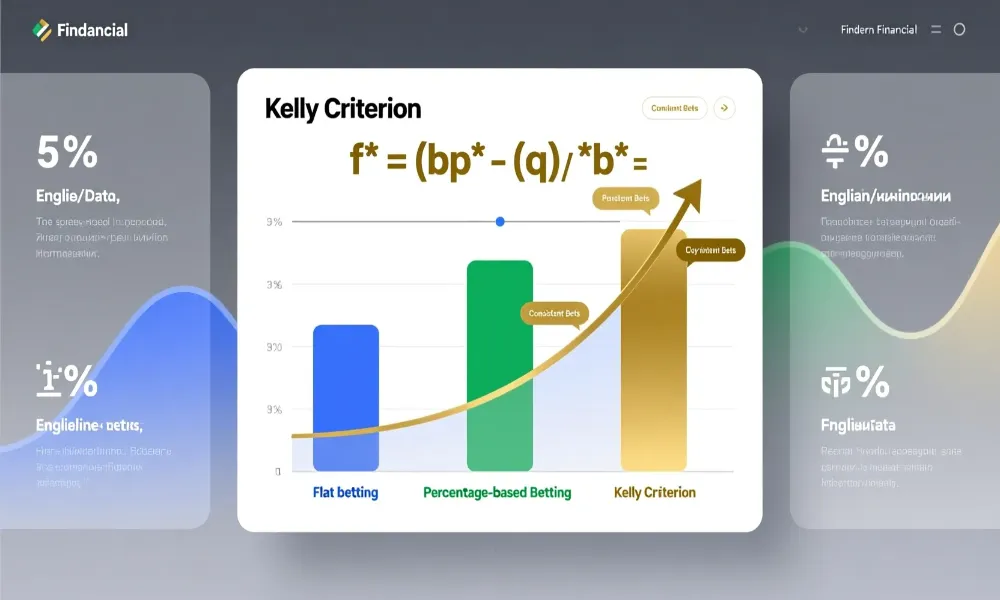
Flat staking means betting identical amount on every bet regardless of confidence level, odds, or circumstances. If you've determined 2% of bankroll is appropriate stake, every bet is 2% whether you're confident or uncertain, whether odds are 1.50 or 5.00, whether you're winning or losing. This removes emotion from staking decisions and prevents most common bankroll management disasters.
The advantage of flat staking is simplicity and psychological ease. No decisions required about how much to bet—you've predetermined the amount during rational moment, now you execute mechanically. No opportunity for emotional overrides like "this one feels certain so I'll bet more" or "I'm cold lately so I'll bet less until hot streak returns." Just consistent, systematic staking.
Professional bettors love flat staking because it's impossible to screw up through emotional decision-making. The only way flat staking fails is if you're consistently betting negative expectation—no staking system fixes that. But if you have any edge whatsoever, flat staking captures it efficiently without exposing you to ruin risk from variance.
Percentage-based staking adjusts bet size as bankroll grows or shrinks. Instead of betting fixed 20 pound amount, you bet fixed 2% of current bankroll. When bankroll grows to 1,200 pounds, bets become 24 pounds. When bankroll drops to 800 pounds, bets become 16 pounds. This automatic adjustment manages risk better than static amounts.
The beauty of percentage-based staking is built-in risk management during losing streaks. As bankroll decreases, bets automatically get smaller, reducing rate of loss and giving you more chances to recover. Conversely, as bankroll increases, bets automatically grow, accelerating profit during winning streaks. This asymmetric response helps surviving variance.
The practical implementation requires discipline to recalculate and adjust bet sizes regularly. Most bettors using percentage-based system recalculate weekly or monthly rather than after every bet—constantly adjusting creates overhead and transaction costs. Pick reasonable recalculation frequency and stick to it systematically.
Kelly Criterion represents mathematically optimal bet sizing for maximizing long-term bankroll growth. Formula is f = (bp - q) / b, where f is fraction of bankroll to bet, b is decimal odds minus 1, p is probability of winning, and q is probability of losing (1-p). This generates stake size that balances growth against risk of ruin.
Full Kelly is aggressively optimal—it maximizes growth rate but creates dramatic swings that psychologically torture most bettors. If Kelly says bet 15% of bankroll, that's huge wager that will fluctuate wildly. Most professional bettors use fractional Kelly—quarter Kelly (divide stake by 4) or half Kelly (divide by 2)—to reduce variance while maintaining most of growth advantage.
The challenge with Kelly is estimating your actual edge accurately. Formula requires knowing true probability of winning. If you think you have 60% chance but reality is 53%, Kelly calculation suggests betting way too much. Since most bettors overestimate their edge, using fractional Kelly provides buffer against estimation errors.
Proportional betting adjusts stake size based on perceived edge. Bigger edge justifies bigger bet. Smaller edge warrants smaller bet. This makes intuitive sense—why risk same amount on marginal value bet versus massive value bet? But it requires honest assessment of edge size, which most bettors can't do accurately because they're overconfident.
The implementation might look like base 1% stake for normal value bets, 2% for strong value bets, 0.5% for marginal bets. The discipline is actually having different edge categories and assigning bets honestly rather than just declaring everything "strong value" because you want to bet more.
Level staking variations include increasing stakes after wins or decreasing after losses (progressive systems) or vice versa (regressive systems). The harsh reality is that no progression system generates profit from losing bets. They just redistribute when losses occur—potentially preventing total ruin but definitely not creating edge where none exists. Progression systems are mostly psychological comfort blankets.
Once your funds are safe, focus on finding an edge with value betting.
The Unit System and Proper Bet Sizing
The unit system standardizes bet sizing discussion by defining one unit as your base bet amount—typically 1% of starting bankroll. When bettors discuss results, they reference units won or lost rather than currency amounts. This separates strategy discussion from personal financial specifics and helps compare performance across bettors with different bankroll sizes.
If your bankroll is 1,000 pounds and you use 1% base unit, one unit equals 10 pounds. When you say "I'm up 15 units this month," people understand you've profited 150 pounds regardless of your specific bankroll size. When someone else with 5,000 pound bankroll says same thing, they've profited 750 pounds—different amount but same performance relative to bankroll.
Determining appropriate unit size as percentage of bankroll depends on your edge, variance of your bets, and risk tolerance. Stronger demonstrated edge justifies larger units. Higher variance bet types require smaller units. Personal comfort with bankroll swings affects appropriate sizing. Standard recommendations range from 1-3% per unit, with most conservative professional bettors using 1-2%.
The mathematics of why these percentages matter: betting 5% per wager with 50% win rate means you can sustain only around 14 consecutive losses before losing half your bankroll. At 2% per wager, you can sustain 35 consecutive losses before halving bankroll. The extra runway matters enormously for surviving inevitable cold streaks.
Confidence-based unit allocation adjusts bet sizing within reasonable range based on conviction. Your base bet might be 1 unit (1% of bankroll), strong conviction bets might be 2 units (2%), exceptional opportunity might be 3 units (3%). This allows capitalizing on best opportunities while maintaining conservative approach on typical bets.
The trap is that most bettors vastly overestimate how many bets deserve increased units. If 80% of your bets are "strong conviction," you're just betting too much across the board. Professional approach is having very selective criteria for larger bets—maybe 5-10% of total bets qualify for increased units.
Never betting more than you can afford means establishing maximum stake that's truly comfortable. Even if Kelly Criterion or confidence level suggests betting 10% of bankroll, if that amount would cause genuine stress or financial strain if lost, you're betting too much. Risk management isn't just about mathematical optimization—it's about maintaining psychological stability that enables good decision-making.
The personal maximum varies wildly between bettors. Some professionals are perfectly comfortable betting 5% of bankroll because they've internalized probabilistic thinking and emotional detachment from individual results. Most recreational bettors start feeling uncomfortable above 2% because they're still emotionally invested in each bet's outcome. Know your psychological limits and respect them.

Common Bankroll Management Mistakes
Betting too much per wager is the absolute most common mistake and most expensive. Bettors see their 1,000 pound bankroll, figure they'll bet 50 or 100 pounds per match, and wonder why they're broke within weeks. You simply cannot bet 5-10% of bankroll per wager and survive normal variance. The mathematics of ruin guarantee failure.
The psychology driving this mistake is that small bets feel pointless—why bet 10 pounds when I could bet 100 pounds and make real money? The answer is that betting 100 pounds per match with 1,000 pound bankroll leads to ruin regardless of skill. Betting 10 pounds gives you 100 chances to learn, improve, and prove edge before bankroll pressure becomes critical.
Chasing losses by increasing stakes after losing bets is second most common disaster. You're down 200 pounds, frustrated, and desperate to get even quickly. So you bet 50 pounds instead of usual 20 pounds on next bet, figuring you'll catch up faster. This is the absolute worst moment to increase stakes because you're emotionally compromised and making desperate decisions rather than analytical ones.
The mathematical reality is that chasing losses doesn't improve your edge—it just creates bigger swings that accelerate ruin. If you're a 52% win rate bettor betting into 5% bookmaker margin, you're slightly profitable long-term. Doubling stakes doesn't make you 60% winner or eliminate the margin. It just means you blow through bankroll faster when variance turns against you.
Poor record keeping means you don't actually know whether you're profitable, which bet types work, or how your bankroll is trending. You might feel like you're winning because you remember the big scores and forget the slow leaks. Only systematic tracking reveals truth. Professional bettors maintain detailed spreadsheets recording every bet with date, selection, odds, stake, result, reasoning, and profit/loss.
The discipline is updating records immediately rather than waiting. Bet now, record now. Waiting until end of day or end of week means you'll forget details or procrastinate until records are hopelessly behind. Five minutes of record-keeping per day prevents complete blindness about your actual performance.
Failing to adjust stakes as bankroll changes locks you into bet sizes that might be inappropriate. If your bankroll grows from 1,000 to 2,000 pounds but you're still betting 10 pound units from the original bankroll size, you're being unnecessarily conservative and leaving profit potential on table. If bankroll drops to 500 pounds but you're still betting 10 pounds, you're being recklessly aggressive and courting ruin.
Emotional bet sizing where you bet more when confident and less when uncertain sounds logical but usually backfires because confidence doesn't correlate with accuracy. Humans are overconfident by nature—we feel most certain about bets that confirm our existing beliefs, which doesn't make them more likely to win. Betting more on "sure things" just means losing more when those sure things inevitably fail.
The professional approach is accepting that you don't know which individual bets will win. You have process that identifies positive expectation bets over large samples, but predicting specific outcomes is impossible. Therefore consistent staking rather than confidence-based staking makes mathematical sense.
Tracking Performance and Making Adjustments
Recording every bet with essential details creates dataset that reveals actual performance versus perceived performance. Essential information includes date, sport/league, specific bet selection, odds, stake amount, result (win/loss/push), profit/loss in currency, and brief reasoning for bet. Optional but valuable: bookmaker used, bet type, closing odds for comparison.
The spreadsheet becomes your truth source when memory and emotion distort perception. You think you're great at betting favorites but records show you're actually profitable on underdogs and losing on favorites. You think you've had terrible month but records show you're up slightly just with higher variance than expected. Data destroys comfortable lies.
Identifying profitable bet types requires sufficient sample size—minimum fifty bets per category before drawing conclusions, preferably hundreds. Maybe you're profitable betting English Championship but losing money on Premier League. Maybe over/under bets work but match results don't. Maybe parlays destroy your profit despite singles being successful. You only discover these patterns through granular tracking.
The analysis means periodically reviewing data by category—sport, league, bet type, odds range, day of week, home/away, favorites/underdogs. Anything you can categorize, you can analyze. The patterns that emerge tell you where your actual edge exists versus where you imagine it exists.
ROI calculation is simple but powerful metric. Total profit divided by total amount wagered equals return on investment. If you've wagered 10,000 pounds and profited 500 pounds, your ROI is 5%. This percentage lets you compare performance across time periods, different sports, and different bet types on equal footing regardless of stake sizes.
Professional sports bettors consider 5-8% ROI excellent long-term performance. Lower than 5% is still profitable but marginal after accounting for time invested. Higher than 8% sustained over large sample suggests either exceptional skill or insufficient sample size where you're running hot. Anyone claiming 20-30% ROI is either lying, not accounting for all bets, or showing small sample luck.
The psychological difficulty is that adjustments feel like admitting failure. You've spent months learning Serie A, and now data says you're losing money betting it. Feels terrible to abandon that investment. But sunk cost fallacy is cognitive bias that destroys bankrolls. Past effort is gone regardless—only question is whether future bets will be profitable.
Knowing when to take a break is crucial skill. If you're on brutal losing streak and feeling emotional, desperate, or tilted, stop betting. Walk away for few days or weeks, clear your head, review your process rationally, then return when you're psychologically reset. Forcing action during emotional crisis extends losing streaks and creates compounding disasters.

Bankroll Management During Winning Streaks
Resisting overconfidence when winning is psychologically harder than managing losing streaks. Wins feel validating—you're genius, your process is perfect, you've figured out betting. This overconfidence leads to increasing stakes beyond reasonable levels, betting outside your edge areas because everything's working, and generally getting sloppy with process because immediate feedback suggests you don't need discipline.
The reality is that winning streaks are partially skill and partially variance. Even profitable bettors with genuine edge experience periods where variance runs positive—they're hitting slightly more bets than expectation suggests. This is normal statistical fluctuation, not evidence that you've suddenly become better bettor. Treating temporary hot streak as permanent skill level leads to ruin when regression occurs.
The discipline is maintaining same staking plan during winning streaks as losing streaks. If you bet 1% of bankroll normally, you bet 1% of (now larger) bankroll during winning streak. Don't increase to 3% because you're hot. Don't start betting sports you don't understand because everything's working. Don't get loose with process because recent results are good.
The conservative approach is setting bankroll target—maybe 150% of starting bankroll—and withdrawing everything above that level. This lets bankroll grow moderately while extracting profits regularly. It prevents bankroll bloat where you're unnecessarily betting with 10,000 pounds when 3,000 pound bankroll is sufficient for your stakes.
Avoiding lifestyle inflation means not increasing spending based on betting winnings. If you had 2,000 pound monthly budget before betting successfully, maintain that budget. Don't upgrade apartment, buy expensive car, or increase baseline spending. Betting income is volatile—hot streak doesn't mean permanent income increase. Live below your means regardless of recent results.
The trap is treating winning streak profit as secure income. It's not. Variance giveth and variance taketh away. Money won during good variance should be saved for surviving bad variance, not spent on depreciating assets or recurring expenses that become difficult to sustain when results normalize.
Bankroll Management During Losing Streaks
Avoiding panic when losing is critical psychological challenge. Losing streak feels terrible—you're doubting your ability, questioning your process, feeling financial pressure if stakes are too high. Natural instinct is changing everything desperately trying to stop the bleeding. Natural instinct is usually wrong.
The statistical reality is that losing streaks are mathematically inevitable. Even 55% win rate bettor—legitimately profitable long-term—can expect multiple streaks of 10+ losses during any given year. These streaks don't mean your edge disappeared. They mean you're experiencing normal variance within probabilistic system.
The discipline is trusting your process when results temporarily don't reflect it. Review your bets during losing streak objectively. Are you making same quality decisions as always, just getting unlucky? Or have you actually gotten sloppy, emotional, or undisciplined? If process is solid, maintain course. If process degraded, fix that—don't change entire strategy because variance turned negative.
The mathematics are brutal—when you're already down 30% of bankroll from losing streak and you double stakes trying to recover faster, you're creating exponentially higher ruin risk. Now a normal continuation of the losing streak doesn't just hurt—it completely destroys you. Chasing losses turns recoverable drawdown into permanent catastrophe.
Taking breaks during prolonged losing streaks provides psychological reset. Sometimes you need to step away from betting entirely for week or two, clear your head, stop feeling desperate about recent results, then return with fresh perspective. This doesn't fix bad strategy, but it does prevent emotional decision-making from converting bad variance into permanent damage.
Risk Management Principles for Long-Term Success
Diversification across markets spreads risk when done intelligently. Betting multiple leagues or sports where your edges are uncorrelated means bad variance in one area doesn't synchronize with bad variance in others. This smooths overall bankroll volatility compared to being heavily concentrated in single league where one month of bad variance means one month of terrible results.
The trap is false diversification where you're not actually diversified, just spreading ignorance across more areas. Betting five leagues you understand poorly isn't diversification—it's dilution. Real diversification means having genuine edges in multiple uncorrelated areas. If you only have edge in one league, bet that league exclusively rather than pretending you have edges elsewhere.
Avoiding over-leverage means never betting larger percentage of bankroll than your edge and variance levels justify. If Kelly Criterion suggests betting 4% but you have any doubt about your edge estimation, bet 1-2% instead. The asymmetry of gains versus losses means protecting downside matters more than maximizing upside. Losing 50% of bankroll requires 100% gain to recover—asymmetry penalizes over-betting.
The psychological benefit is that stop-losses remove decision-making during emotional crisis. You've predetermined the stopping point during rational moment. When you hit it, decision is already made—stop betting, review process, only resume after thorough analysis. No negotiating with yourself, no "just one more bet to get even" thinking.
Responsible gambling practices include treating betting as entertainment with cost rather than income source for most bettors. If you're betting for fun, budget entertainment spending and accept that money is likely gone. If you're betting professionally, track everything rigorously and base all decisions on data. Don't confuse the two approaches—casual recreational betting pretending to be professional leads to losing money with delusions of skill.
The honest self-assessment is: can you prove with data that you have edge? Hundreds of tracked bets with positive ROI and results that are statistically unlikely to be pure luck? If yes, professional approach makes sense. If no, recreational approach is appropriate—bet small amounts you can afford to lose for entertainment value without pretending it's skilled investing.

Building Sustainable Bankroll for Long-Term Betting
Starting small and growing organically is boring advice everyone ignores because they want meaningful action immediately. Starting with 500 pounds and betting 5 pounds per match feels pointless when you're dreaming about making thousands. But starting small is precisely how you survive long enough to develop genuine skill.
The professional path is treating first year or two as paid education. You're learning, making mistakes, developing process, all while keeping stakes low enough that mistakes don't create financial catastrophe. As you prove edge over hundreds or thousands of bets, you increase bankroll and proportionally increase stakes. Growth is slow but sustainable.
Treating betting as business means reinvesting some profits into improving your operation. Pay for premium data if it provides genuine edge. Invest in analytical tools that improve decision quality. Take courses on statistics or sports analytics if they enhance skills. Buy additional monitors for tracking multiple games and odds movements. These investments pay for themselves if they meaningfully improve results.
The long-term mindset is evaluating betting career across years, not weeks or months. Bad month means almost nothing. Bad quarter deserves attention but not panic. Bad year suggests real problems requiring strategy overhaul. Good year suggests you're doing things right but doesn't guarantee permanent success. The mental framework is long-term sustainable profit, not getting rich quickly.
Protect your funds with help from Coventry-Bet.com.
