
Mastering Bet Builder Strategies for Football Betting
 Available in US
Bet builders are everywhere now. Every bookmaker has them, every punter's tried them, and most people are using them completely wrong. The concept sounds brilliant—combine multiple selections from the same match into one bet with multiplied odds—but the execution is where things fall apart. People throw together random selections hoping to hit a lottery ticket rather than building strategic combinations backed by actual analysis.
Let me tell you what nobody wants to admit: bookmakers love bet builders. They wouldn't promote them so aggressively if they weren't profitable for the house. But here's the thing—that doesn't mean you can't use them profitably. It just means you need to approach them completely differently than casual bettors scrolling through their app on Saturday morning, clicking whatever looks exciting.
I've spent years analyzing bet builder patterns, tracking which combinations hit versus which look good on paper but fail consistently, and reverse-engineering how bookmakers price these things. What I've learned is that bet builders done right offer genuine value opportunities because bookmakers can't price correlation perfectly across thousands of selection combinations. Done wrong, they're expensive lottery tickets with terrible odds.
This guide breaks down bet builder mechanics, explains why most people lose money on them, shows you how to identify genuinely correlated selections versus fake correlation that destroys your edge, and provides frameworks for building combinations that actually work long-term. We're going past the surface-level "pick three things and hope" approach into statistical thinking and tactical analysis that separates profitable bet building from gambling.
What Bet Builders Actually Are and How They Work
Bet builders let you combine multiple selections from single match into one accumulated bet. Instead of betting Tottenham to win, over 2.5 goals, and Harry Kane to score as three separate bets, you combine them into one bet at multiplied odds. The appeal is obvious—bigger potential returns from combining confident predictions. The reality is more complicated.
Bookmakers price bet builders using algorithms that account for correlation between selections. This is crucial to understand because it's where most bettors go wrong. If you combine completely independent outcomes—like Tottenham to win and exactly seven corners in the match—the odds multiply straightforwardly. But if you combine correlated outcomes—like Tottenham to win and Harry Kane to score—bookmakers reduce the combined odds because these things are more likely to happen together than independently.
The math behind this matters. Independent events multiply probabilities directly. If outcome A has 50% probability and outcome B has 50% probability and they're independent, combined probability is 25%. But if they're positively correlated—when A happens, B becomes more likely—the actual combined probability might be 35% or 40%. Bookmakers adjust odds accordingly, but here's the key: they don't always get the correlation adjustment perfect, especially for complex multi-leg builders involving player props and tactical scenarios.
Traditional accumulators combine matches across different games, so each selection is genuinely independent—Manchester United's result doesn't affect what Liverpool does hours later. Bet builders combine selections within single match where everything connects. Tottenham dominating possession affects corner counts, affects shot totals, affects whether Kane gets chances. This interconnection makes pricing bet builders significantly harder than pricing standard accumulators.
Bookmaker algorithms use historical data to model correlation, but football is complex and constantly evolving. Tactical innovations, formation changes, and situational context create correlation patterns algorithms might not fully capture. When you understand football tactics and statistical relationships better than the pricing algorithm does, you've found your edge.
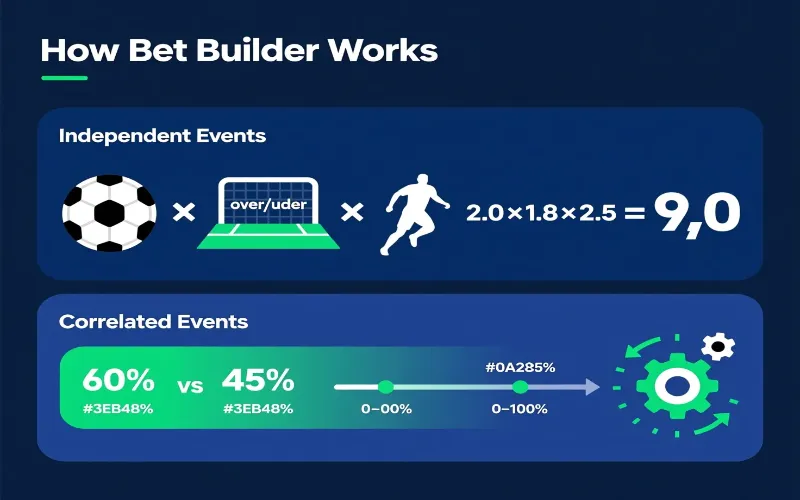
The user interface of bet builders makes them dangerously tempting. Apps show you potential returns in real time as you add selections, watching odds multiply into impressive numbers. But those multiplied odds are specifically calculated to favor the bookmaker over the bettor. The easier something is to bet on—one click, instant gratification, exciting big odds—the more skeptical you should be about whether it's actually good value.
Most bookmakers now offer bet builder insurance or promotions—if one leg loses, get money back as free bet. These promos make bet builders seem less risky, but read the terms carefully. Maximum stakes are usually tiny, winnings come as restricted bonuses, and the insurance exists because bookmakers know these bets lose more than recreational bettors realize.
Components of a Winning Bet Builder Strategy
Match result selections form the foundation of most bet builders because they're high-probability outcomes that anchor the bet. Backing the favorite to win at low odds doesn't excite anyone, but combining it with correlated selections that become more likely when favorite wins creates strategic approach. If Manchester City is playing Norwich, City winning is highly probable. Now you're layering additional selections that make sense when City wins—City over 1.5 goals, Norwich under 0.5 goals, Erling Haaland anytime scorer.
The trap people fall into is adding match result just because it lengthens odds without considering whether it actually correlates with other selections. If you're building bet around lots of fouls and cards—defensive, scrappy match—adding a high-scoring correct score contradicts your thesis. Your selections should tell consistent story about how you think the match unfolds.
Goal-based markets offer straightforward correlation opportunities. Over 2.5 goals correlates positively with both teams to score. Under 2.5 goals correlates with one or both teams failing to score. These seem obvious, but you'd be surprised how many bettors combine contradictory goal selections because they're chasing odds rather than building coherent logic.
The nuance comes with team-specific goal markets. If you're betting Manchester City over 2.5 team goals and opposition under 0.5 team goals, you're taking a position on dominance. That correlates well with City winning, high possession, lots of City corners, City players getting shots on target. Build your entire bet builder around this domination thesis rather than randomly adding unrelated selections.
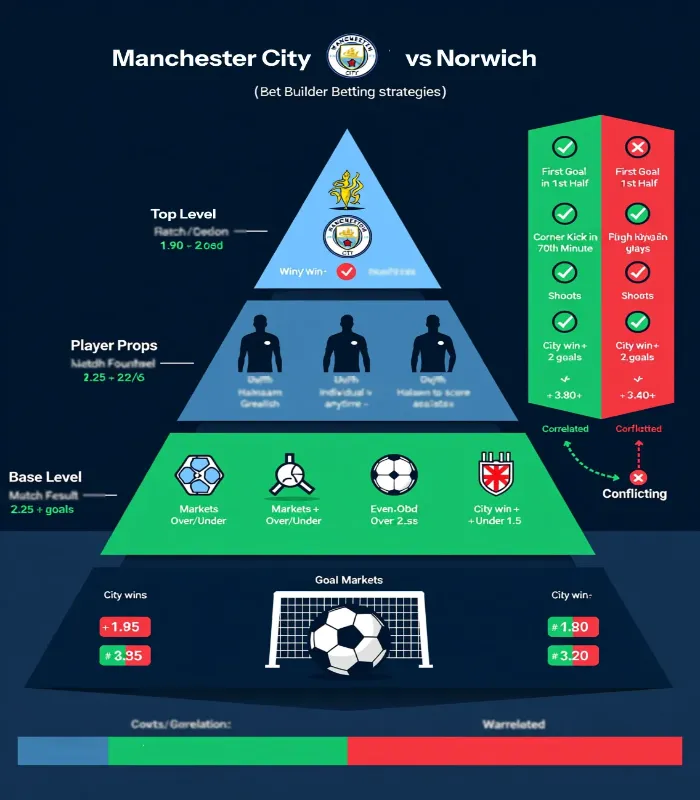
Player props require different thinking because individual performance is more variable than team outcomes. Betting on specific player to score requires that player to start, stay on the pitch, get service, and finish chances. That's multiple contingencies, each reducing probability. The correlation to consider: if you're betting team to dominate and win heavily, their star striker getting on scoresheet makes sense. If you're betting low-scoring draw, neither team's striker scoring is less likely.
Cards and corners markets appeal to bet builder enthusiasts because they add legs without requiring more goals. But these markets are tricky because bookmakers adjust odds heavily. Betting over 3.5 cards in a match officiated by referee who averages 5 cards per match offers value. Betting it with a lenient referee who averages 2.5 cards per match doesn't, regardless of how the teams play.
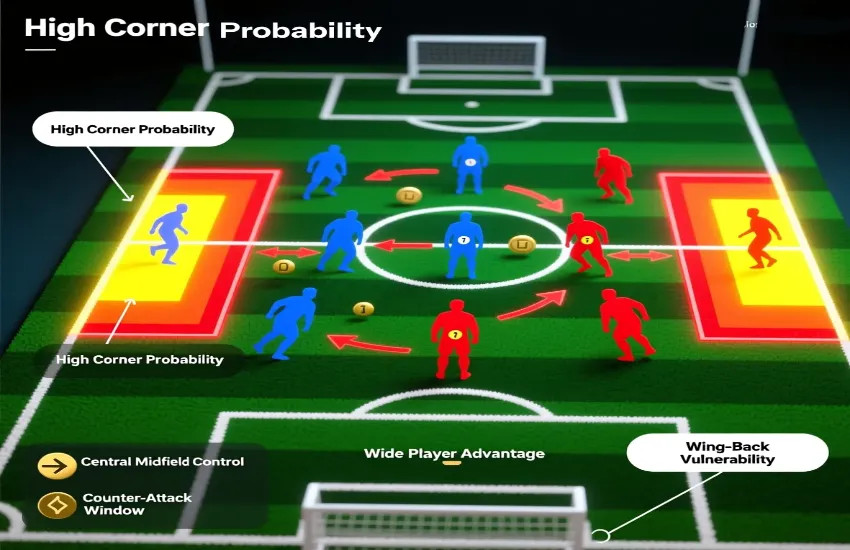
Corner markets correlate with possession and attacking intent. Teams that dominate possession and push players forward generate more corners. Defensive teams sitting deep generate fewer corners but might concede more. If you're betting on dominant team to win comfortably, adding corners for that team makes sense. Adding corners for defensive underdog contradicts the dominance narrative unless you specifically expect them to counter-attack effectively.
Combining these components requires narrative consistency. Each selection should support the same story about how the match unfolds. If Manchester City beats Norwich 4-0 with City dominating possession, that supports City win, over team goals for City, under team goals for Norwich, City corners, Haaland scorer. Every piece fits together. Throwing in random selections like "exactly 9 corners total" or "Kevin De Bruyne yellow card" without tactical reasoning breaks the coherence.
The best bet builders tell stories: "City dominates, scores early, Norwich sits back and can't create anything, City racks up corners and shots, Haaland gets on scoresheet." That's a coherent narrative you can analyze and bet on. Random collection of markets hoping they all hit isn't strategy—it's lottery gambling.
Before placing a wager, it is useful to understand bet builder odds calculation.
Common Bet Builder Mistakes
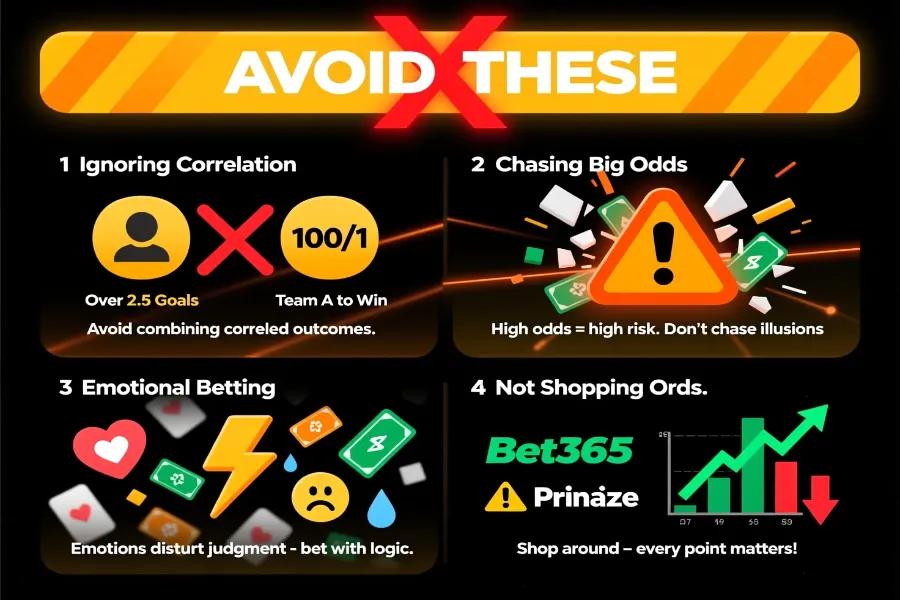
Ignoring correlation between selections kills more bet builders than anything else. People add "Manchester United to win" and "Both teams to score" without considering whether these actually fit together. If United is expected to win 3-0 or 4-0, both teams scoring becomes less likely. If you expect competitive 2-1 match, both makes sense. But bettors add selections independently, watching odds multiply, without thinking about whether they actually coexist logically.
Negative correlation destroys value even faster than ignoring correlation. Betting "Under 2.5 goals" and "Both teams to score" creates contradiction—both could hit in a 1-1 match, but you're betting against yourself because one selection makes the other less likely. Bookmakers love these combinations because bettors pay multiplied odds for self-contradicting positions that reduce actual combined probability.
Chasing astronomical odds reveals misunderstanding of probability. Bet builders paying 50/1, 100/1, 200/1 might hit occasionally, but mathematics guarantees long-term losses unless you've identified genuine mispricing. Bookmakers price these specifically to ensure profitability despite occasional payouts. The recreational bettor hitting 87/1 bet builder and telling everyone about it is lottery winner, not skilled bettor demonstrating repeatable strategy.
Betting emotionally rather than analytically happens constantly with bet builders. You're watching Liverpool and want to make the match exciting, so you build something with Liverpool goals, Salah scoring, cards, corners—just random stuff that sounds entertaining. Entertainment value and betting value are completely different concepts. Build bet builders when analysis supports them, not because you're bored on Saturday afternoon.
Failing to shop odds between bookmakers leaves money on table. Different bookmakers price bet builders slightly differently because they use different correlation models and have different customer bases to manage risk against. The same four-leg bet builder might be 8/1 at one bookmaker and 11/1 at another. Checking multiple books before placing these bets is non-negotiable for serious bettors.
Advanced Bet Builder Techniques
Tactical analysis integration separates sophisticated bet building from casual punting. If you know Leicester plays 4-4-2 and Newcastle plays 5-3-2, you can predict match dynamics better than bookmaker algorithms working from general statistical models. Leicester's wide players will find space against Newcastle's wing-backs, suggesting Leicester corner opportunities and wide player involvement—actionable information for bet building.
Formation matchups create systematic patterns. Three-at-the-back formations often concede corners because they defend wide areas less effectively than four-at-the-back. High defensive lines are vulnerable to pacey strikers running in behind, which affects whether those strikers get shots on target and scoring opportunities. Use tactical knowledge to predict match characteristics that mainstream bettors miss.
Manager tendencies provide predictive power. Some managers are inherently defensive, even when favored—think Tony Pulis or Sean Dyche disciples. Their teams don't generate huge goal totals even against weak opposition because philosophical approach prizes defensive solidity over attacking excess. Building bet builders around high scoring for these teams ignores managerial reality.
Conversely, managers like Jurgen Klopp or Marcelo Bielsa prioritize attacking football and pressing intensity that generates chances even when tactically suboptimal. Their matches trend toward higher event counts—more shots, more goals, more transitions, more fouls from high pressing. Build bet builders aligned with managerial philosophy rather than fighting it.
Referee tendencies are massively underrated in bet builder construction. Some referees show cards extremely freely—above 4 cards per match average. Others let matches flow—below 2.5 cards per match. When you're building bet around total cards or specific player cards, referee identity is crucial information. Bookmakers account for referees in their pricing, but retail bettors often ignore it entirely, creating opportunities when your analysis is more precise than market consensus.
Referee positioning and style also affect corner counts and foul counts beyond just cards. Referees who let physical play continue reduce fouls called and cards shown but might increase corner counts as physical defending concedes corners rather than fouls. Understanding these nuances creates edges in markets most bettors bet blindly.
Weather and pitch conditions affect match characteristics in predictable ways that bookmaker algorithms might underweight. Heavy rain makes passing difficult, increases defensive errors, reduces goal quality but sometimes increases goal quantity through mistakes. Building bet builders that account for weather when bookmakers don't creates systematic edge.
Strong winds dramatically affect corner counts because crosses and set pieces get disrupted, recycled, and retaken. If you're aware of 30+ mph winds forecast but bookmakers' corner lines don't reflect this, you've found exploitable inefficiency perfect for bet builder inclusion.
Motivation and match importance create psychological factors affecting style and intensity. Team fighting relegation plays differently than team safe in mid-table. Team chasing promotion plays differently than team with nothing to play for. Building bet builders that account for motivation—expecting more cards and fouls when stakes are high, expecting rotation and lower intensity when stakes are low—demonstrates advanced strategic thinking.
Turning Bet Builder Strategy Into Consistent Profit
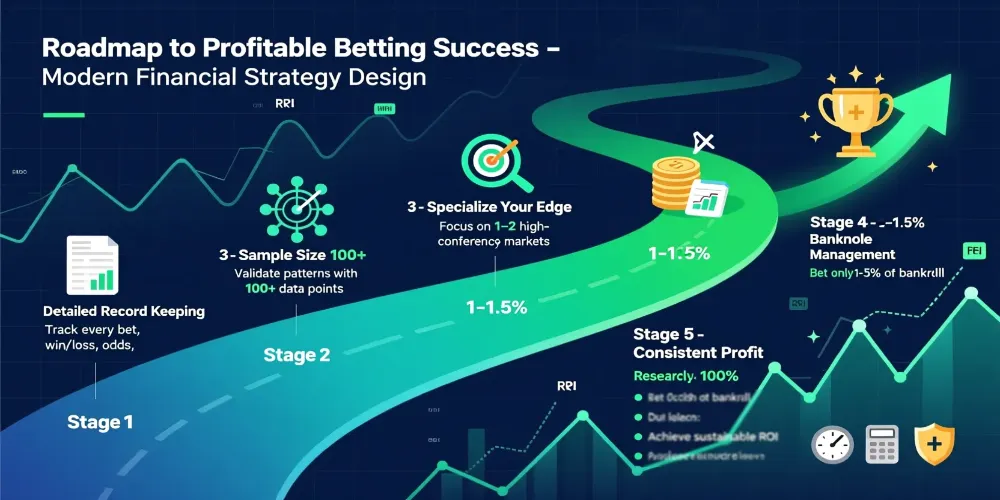
Record-keeping for bet builders requires more detail than standard bet tracking. Record not just results but individual leg outcomes. Over time, you'll identify which types of selections work for you and which consistently fail. Maybe your player prop selections are excellent but your corner selections are terrible. Without granular records, you can't identify these patterns and adjust strategy.
Sample size requirements for evaluating bet builder success are larger than for standard bets because of additional variance from multiple legs. You need hundreds of bet builders before drawing conclusions about skill versus luck. Ten successful bet builders doesn't prove anything—you might have gotten lucky. A hundred bet builders with detailed tracking reveals actual patterns.
Bet builder specialization often outperforms diversification. Rather than building bet builders across all matches and leagues, find specific scenarios where you have genuine edge—maybe late-season relegation battles, maybe specific tactical matchups, maybe certain managers or referees. Exploit your knowledge areas rather than pretending you have edge everywhere.
Professional bettors often completely avoid bet builders because the structure inherently favors bookmakers through correlation-adjusted pricing. The recreational appeal—exciting, engaging, potentially huge payouts—makes them profitable for bookmakers. But that doesn't mean value doesn't exist for sophisticated bettors approaching them strategically rather than recreationally.
The key is treating bet builders as tool for specific situations rather than default betting approach. When you've identified match where multiple correlated outcomes offer genuine value and combining them provides better risk-reward than betting them separately, bet builders make sense. When you're just clicking things hoping to hit big payout, you're donating money to bookmakers.
Bankroll management for bet builders needs adjustment for increased variance. Because multiple legs must hit, even well-constructed bet builders lose more frequently than single bets. If you normally risk 2% of bankroll per bet, consider reducing bet builder stakes to 1-1.5% to account for additional variance. The higher potential payouts are attractive, but they must be balanced against lower win probability.
Hedging and cash-out strategies with bet builders create risk management opportunities. If three of four legs have hit and you're sweating the final leg, cashing out for guaranteed profit might be smarter than gambling on final outcome. Alternatively, betting against your final leg at another bookmaker creates hedge that guarantees profit regardless of result. These options didn't exist in traditional betting and create strategic flexibility when used intelligently.
The reality check: most bet builders are -EV (negative expected value) because bookmakers price them to be. The question is whether you can identify and exploit the minority that offer genuine value through superior analysis, better understanding of correlation, and recognition of systematic biases in how bookmakers price these complex multi-leg bets. It's possible, but it requires work that most bettors won't do.
Discover top strategies at Coventry-Bet.com.
