
Form Analysis for Championship Betting: Reading Momentum Correctly
 Available in US
Form represents the most discussed yet most misunderstood concept in football betting. Everyone tracks recent results, but few interpret them correctly. The simplistic view that winning teams should be backed and losing teams opposed ignores the nuance that separates profitable form analysis from results-chasing behaviour. Understanding what form actually reveals — and equally importantly, what it obscures — provides genuine betting edge.
The Championship's marathon format makes form analysis particularly valuable. Forty-six matches create multiple distinct phases where team performance fluctuates dramatically. The side dominating in October may struggle in February before recovering for the run-in. Identifying these momentum shifts as they occur, rather than recognising them retroactively, represents the analytical challenge bettors must master.
Defining Form Appropriately
Recent results provide the surface layer of form assessment. The classic "last five matches" summary offers quick orientation but lacks depth for serious analysis. A team showing W-W-L-W-D might seem in decent form, but context determines whether this assessment holds. Were wins against strong or weak opposition? Did losses come from genuinely poor performance or variance against the run of play?
Underlying performance often diverges from results during form runs. Teams can win matches while performing poorly, benefiting from opponent mistakes, fortunate refereeing, or variance that temporarily favours them. Conversely, teams losing matches despite dominant performances deserve different assessment than teams losing through genuine inferiority.
Distinguishing genuine form shifts from variance requires looking beyond results. When a previously struggling team wins three consecutive matches, determining whether fundamental improvement occurred or whether temporary luck intervened shapes expectations for subsequent fixtures. Statistical measures like xG and shot data help make this determination.
Psychological momentum exists alongside statistical form. Teams believing they're playing well develop confidence that sustains performance; those convinced of their struggles often manifest the failures they expect. This psychological element means form can become self-reinforcing in ways pure statistics don't capture.
Measuring Form Quantitatively
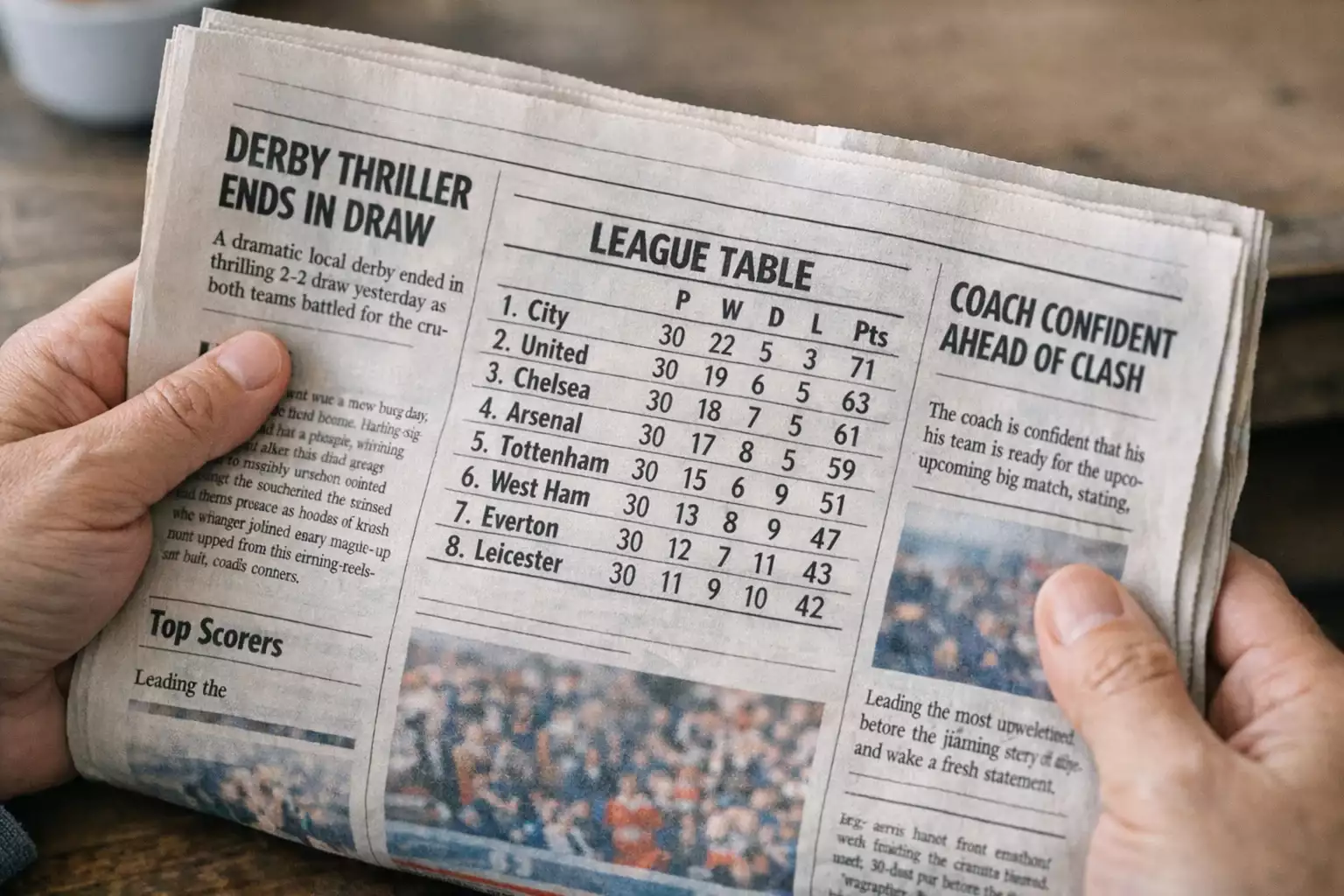
Points per match across recent windows provides the most straightforward form metric. Averaging results over last five, ten, and fifteen matches reveals trends that single results obscure. Championship promotion pace requires approximately 2.0 points per match; play-off pace around 1.6; survival roughly 1.0. Comparing current rates to these benchmarks contextualises form.
Goal difference trends reveal attacking and defensive trajectory. A team improving their goal difference over recent matches shows genuine performance enhancement. Declining goal difference despite maintained points often precedes results decline as unsustainable variance eventually corrects.
Form against comparable opposition matters more than overall form. A team beating struggling sides while losing to contenders shows different quality than one performing consistently regardless of opponent. Filtering form by opposition strength provides more predictive information.
Home and away form should be tracked separately. Some teams maintain consistent form across venues; others show dramatic home-away splits. A team winning frequently at home while struggling away requires different betting approaches depending on fixture location.
Form is temporary, but underlying stats like expected goals (xG) in Championship offer deeper insight.
The Regression Principle
Extreme form typically regresses toward average performance. Teams on extended winning runs rarely maintain that pace indefinitely; teams on losing streaks usually improve eventually. Understanding this regression principle helps identify when to back or fade teams based on current trajectory.
However, regression isn't immediate or guaranteed. Some winning runs reflect genuine quality improvements that persist; some losing runs indicate structural problems requiring external intervention to resolve. Distinguishing sustainable form from temporary variance requires integrating multiple information sources.
Market efficiency around form creates betting opportunities in both directions. When markets overreact to hot streaks, fading surging teams offers value. When markets overcorrect for cold spells, backing struggling teams before their inevitable improvement captures value. Identifying which direction markets have moved excessively requires judgment that pure statistics can't provide.
The timing of regression matters for betting purposes. A team due for regression might maintain current form for several more matches before correction occurs. Betting based on expected regression requires accepting that timing remains uncertain, meaning several losses may precede eventual value realisation.
Form Indicators Beyond Results
Training ground reports and manager comments sometimes reveal form shifts before results reflect them. A manager expressing concern about recent performances despite wins signals potential decline; one expressing confidence despite losses suggests maintained belief in approach. Media access varies, but available information helps contextualise form.
Injury and suspension accumulation affects form trajectories. Teams losing key players often see form decline regardless of previous trajectory; those recovering players may improve. Tracking squad availability changes anticipates form shifts that pure results tracking misses.
Tactical evolution during form runs reveals whether success is sustainable. Teams winning through innovative approaches opponents haven't yet solved may see form regress once adjustments occur. Those winning through consistent quality application of established methods more likely sustain success.
Fixture difficulty context shapes form interpretation. A team's winning run against relegation candidates means less than wins against promotion rivals. Upcoming fixture difficulty also matters — continuing form against tougher opponents requires more than maintaining approach that succeeded against weaker sides.
Common Form Analysis Mistakes
Recency bias leads bettors to overweight the most recent match relative to broader samples. A team losing heavily in their last match after five previous wins isn't necessarily declining — single-match variance happens constantly. Maintaining appropriate sample sizes prevents overreaction to individual results.
Ignoring venue effects produces misleading form assessment. A team showing mixed overall form might actually display strong home form and weak away form that cancel out. Analysing venue-specific patterns reveals information that combined assessment obscures.
Projecting form linearly assumes trends continue indefinitely. Teams don't keep winning forever or keep losing forever; form moves cyclically within ranges determined by underlying quality. Expecting trend continuation without recognising range boundaries leads to systematic errors.
Failing to adjust for opponent quality inflates or deflates form assessment inappropriately. Strong form against weak opponents might not transfer to upcoming matches against stronger sides. Contextualising results within the framework of who they came against improves predictive accuracy.
Practical Form Assessment Framework

Begin by examining results across multiple windows — last five, ten, and full season. Look for consistency across windows (stable form) versus divergence (changing form). Stable form suggests continuation; diverging patterns suggest trajectory change in progress.
Investigate underlying performance during the form period. Did xG and shot data support results, or did variance drive outcomes? Sustainable form should show process alignment with outcomes; unsustainable form shows process-outcome divergence that predicts correction.
Consider contextual factors affecting the form period. Key player availability, tactical changes, and fixture difficulty all influence interpretation. Form achieved with full-strength squads against varied opposition means more than form with favourable circumstances.
Assess whether market prices reflect form appropriately. If a team's odds have shortened dramatically after a winning run, the market has already incorporated that form into pricing. Value exists only when your form assessment differs from market consensus.
Project how form likely continues based on all available information. Form neither continues indefinitely nor reverses immediately — realistic projections acknowledge uncertainty while incorporating genuine insight from thorough analysis.
Form in Betting Strategy
Using form as confirming rather than primary evidence often proves effective. When other factors suggest a bet, form confirmation strengthens conviction. When form contradicts other analysis, either the analysis is wrong or form is temporarily misleading — additional investigation determines which.
Betting against extreme form requires courage but often provides value. Backing struggling teams at inflated odds or opposing streaking teams at compressed odds captures regression value that eventually materialises. Accepting that timing remains uncertain prevents frustration when regression takes longer than expected.
Combining form analysis with other metrics produces the strongest betting approaches. Form tells you what's happening now; statistical models suggest what should happen over time; tactical analysis explains why performance occurs. Integrating these perspectives produces more accurate predictions than any single approach alone.
Form analysis for Championship betting demands nuance beyond simple results tracking. Understanding what drives form, how long form typically persists, and when regression becomes likely transforms surface-level observation into genuine analytical edge. The teams winning aren't always improving; the teams losing aren't always declining. Recognising these distinctions identifies betting value that casual observation consistently misses.
Analyze recent trends on our main hub.
